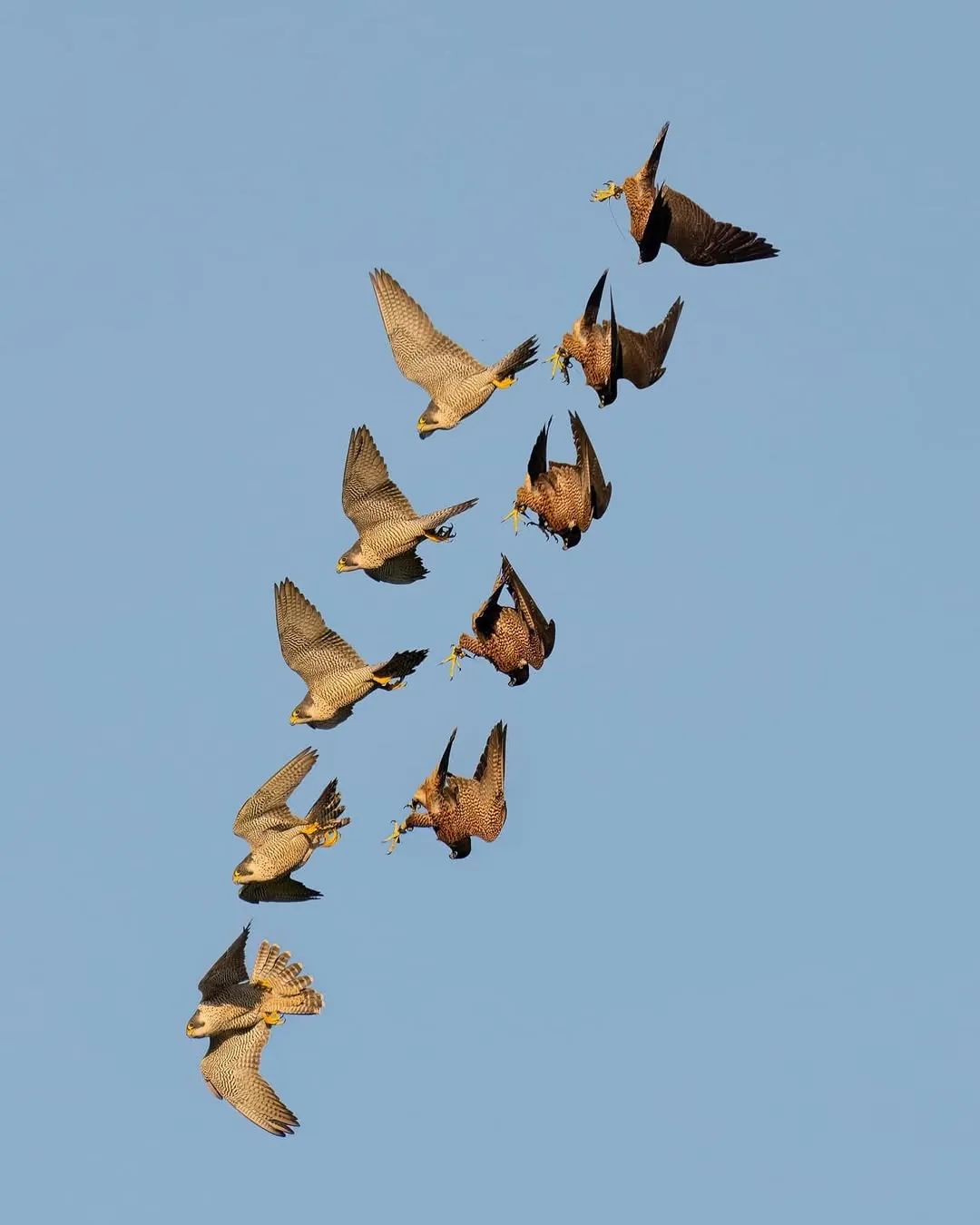
See
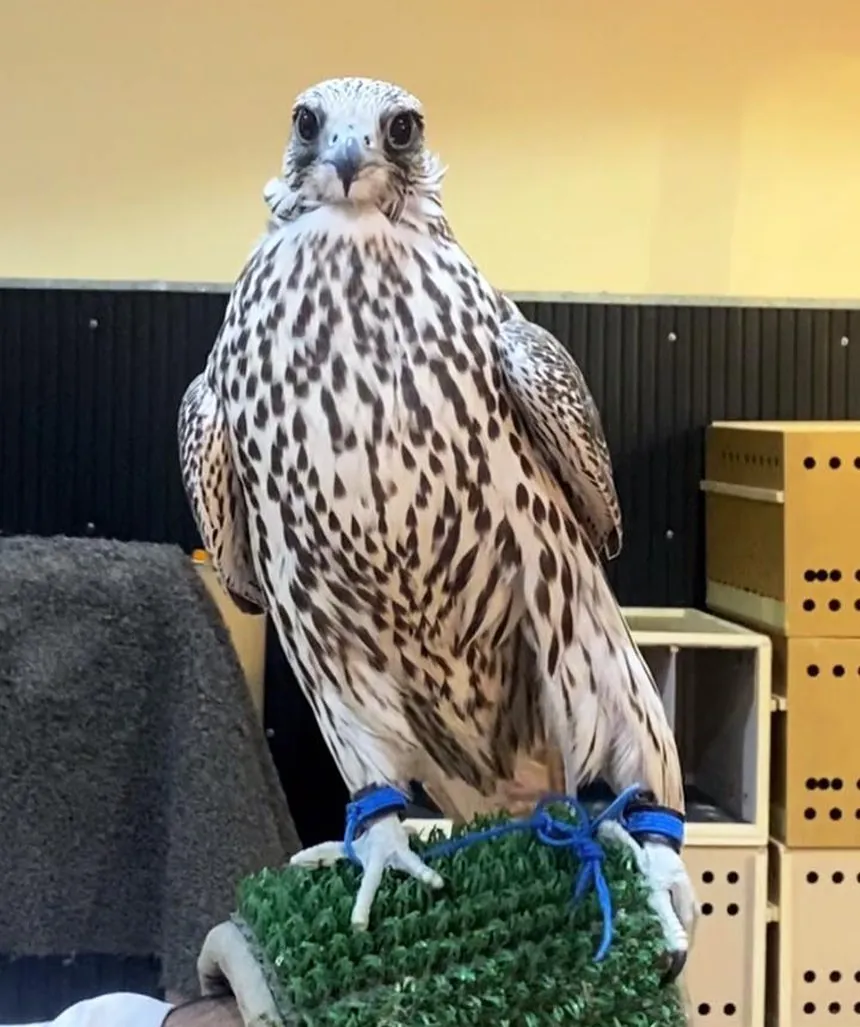
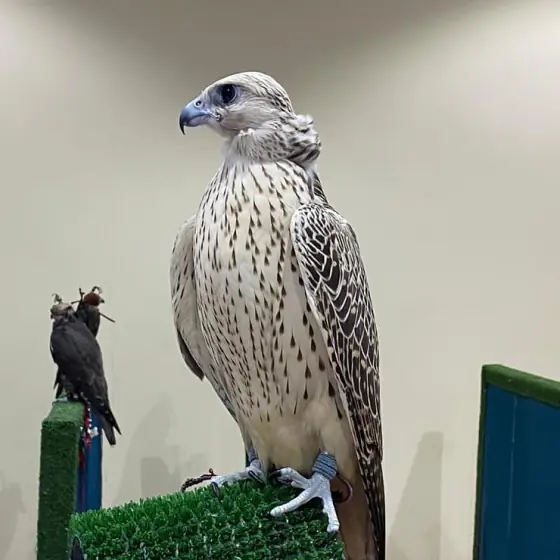
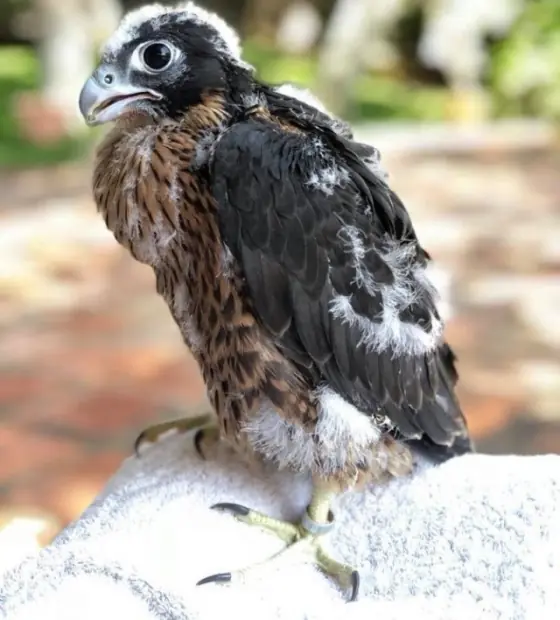
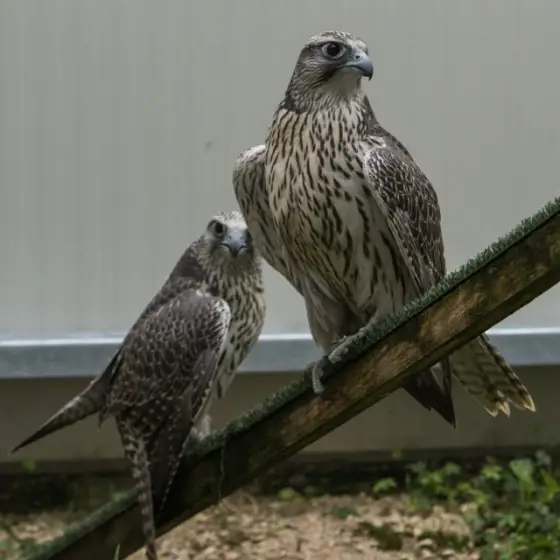
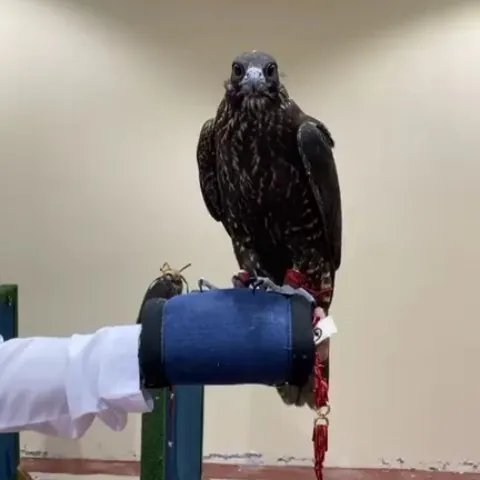
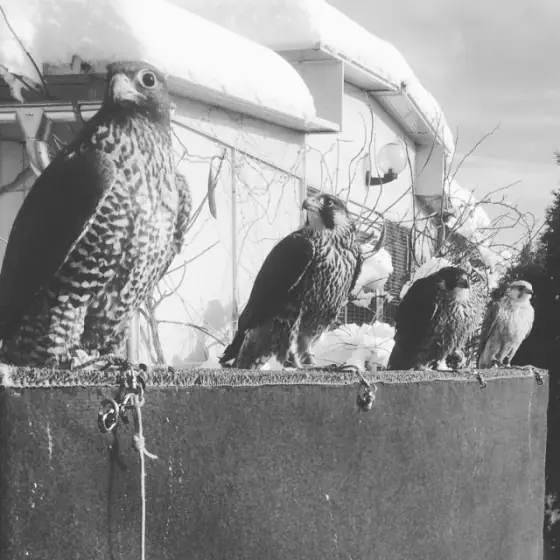
A falcon's eyes are enormous for the size of its head. What they do with light is stranger still.
A ring of bone
Around the front of each eye sits a ring of small, overlapping bones, the scleral ossicles. Birds have them; we don't. They hold the eye's shape while the muscles inside pull on the lens to refocus.
Nothing in the way
Our retinas are threaded with blood vessels. A bird's has none. It is fed instead by the pecten, a pleated comb of blood vessels folded into the eye, so no vessels lie across the image.
Two points of focus
We have one fovea, the small pit of sharpest vision, in each eye. A falcon has two. The deep fovea looks out about 45° to the side and does the long-range work. The shallow one looks forward, into the field both eyes share, to judge distance.
Packed tighter
At the floor of a raptor's deep fovea, cones are packed more than twice as densely as ours: over 450,000 per square millimetre in the wedge-tailed eagle, against about 199,000 at a human's peak. The sharpest-eyed birds of prey resolve about twice the detail we can. The popular "eight times" isn't supported.
Four colours, and fast
Raptors have four kinds of colour cone to our three; the fourth is tuned to violet. They also see fast. A peregrine can tell a light is flickering at least 129 times a second. Most of us lose the flicker somewhere between 40 and 60.
Built-in glare guard
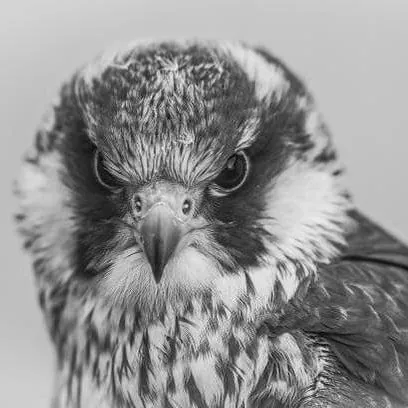
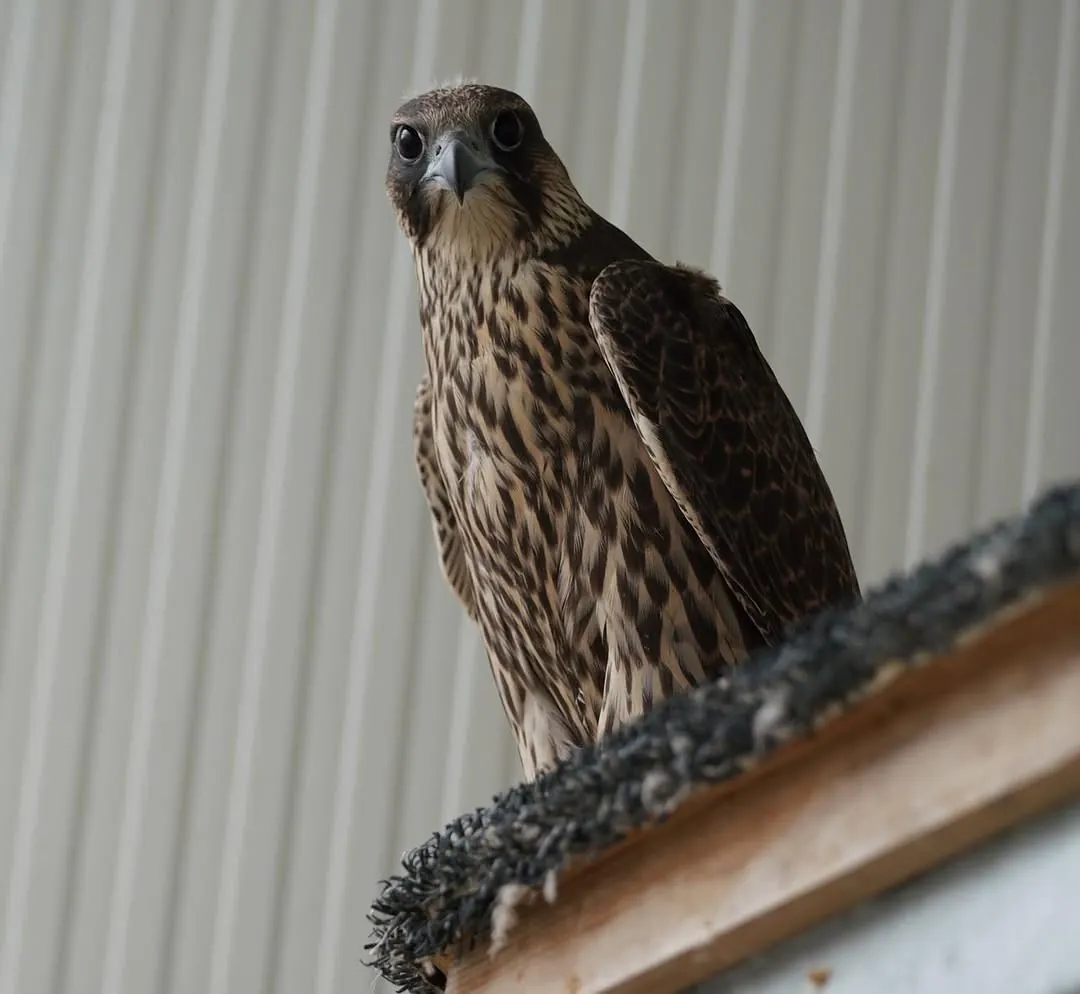
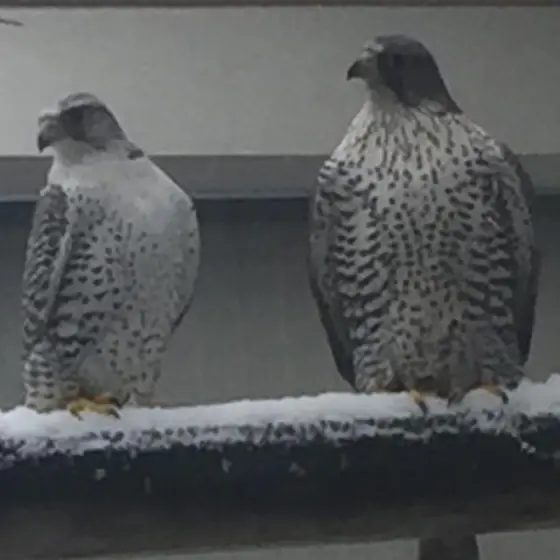
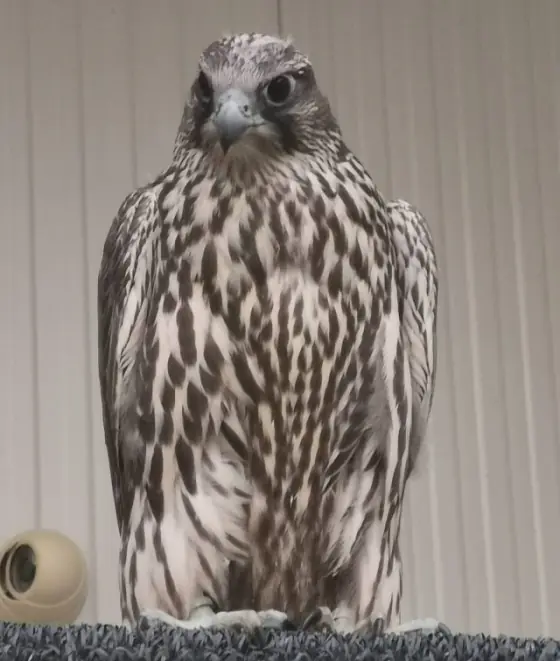
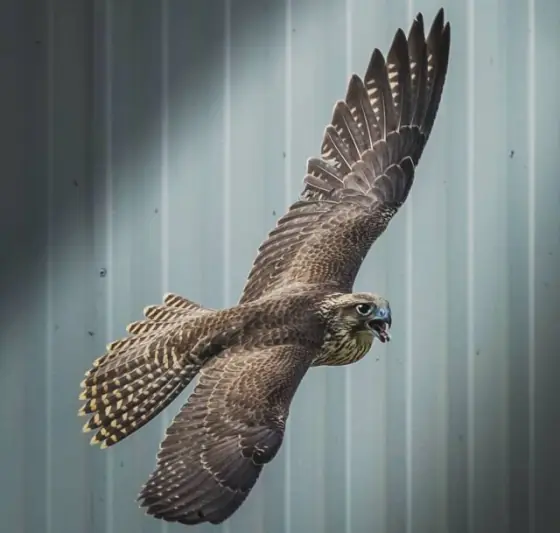
The dark "moustache" under a peregrine's eye is bigger in sunnier parts of the world. A study of more than 2,000 photographs from 94 regions found the link, which supports the idea that it cuts glare, like the eye black a baseball player wears.